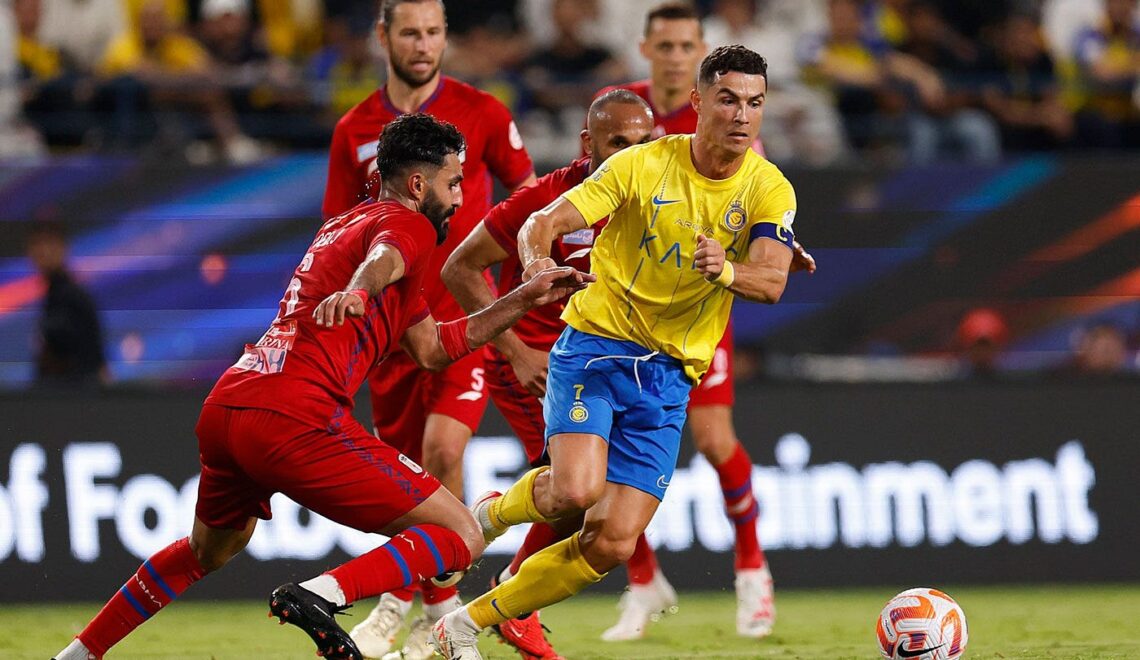
Why Pressing Football Became The Modern Game’s Global Trend
Pressing football describes a proactive defensive approach where teams aggressively pressure opponents who have the ball instead of retreating and waiting in a low block. Over the last decade it has turned from a niche idea into a global trend because it directly shapes chance creation, xG profiles, and match tempo in ways you can see clearly whenever you follow a full game from first minute to last.
What Pressing Actually Is When You Watch A Match
In practical terms, pressing means the defending team moves as a coordinated unit to close down the ball carrier, block nearby passing options, and compress the playable space around the ball. Instead of simply marking zones and waiting, players angle their runs to use their cover shadow, cutting off passing lanes and forcing the opponent into mistakes or predictable routes. When you watch live, you recognise a pressing side when defenders and midfielders step forward together, reacting instantly to a pass rather than drifting back towards their own box.
Why High Pressing Creates So Many Chances From Nothing
The core reason pressing became fashionable is simple: winning the ball close to the opponent’s goal produces chances with higher average xG than building attacks from deep. When a team regains possession near the box, the opponent’s defensive structure is often broken, leaving free runners and open passing lanes, so even a single turnover can generate a very clean shooting opportunity. As a viewer, you will notice that many “easy” goals in modern ลิงค์ดูบอลสด changy start not from long passing moves but from one stolen ball near the corner of the box or a forced mistake from the goalkeeper.
How Different Pressing Heights Change What You See
Pressing is not a single on/off switch; teams choose where on the pitch they want to engage, which changes the rhythm of the match. A high press starts near the opposition box and tries to suffocate build‑up from the goalkeeper, a mid‑block allows some progression before attacking the ball around the halfway line, and a low block reserves pressure for the edge of the defensive third. When you watch, you can read a team’s pressing height by noting where their striker first sprints towards the ball and where the midfield line decides to hold its ground.
Why Pressing Looks Different When You Watch Live Instead Of Highlights
Pressing is about repeated, coordinated movements over many sequences, which often disappear in highlight packages that focus only on shots and goals. When you ดูบอลสด, you see the full pattern: the forward curving his run to show the ball to one side, the winger closing the full‑back, the midfield shuffling over five or six passes until the opponent finally plays the risky ball the pressing team wants. Over 90 minutes, those movements add up to territorial control and sustained pressure that you can feel in the flow of the game long before a goal is scored or an xG chart is drawn.
Pressing Triggers: The Invisible “On” Buttons You Can Learn To Spot
Because it is impossible to sprint all game, pressing teams choose specific moments—triggers—to launch collective pressure. Common triggers include a backward pass that signals insecurity, a poor first touch, the ball moving to a weaker-footed defender, or a pass into a pre‑targeted zone where the pressing team feels numerically strong. When you watch, look for the instant when three or four players accelerate at once after a seemingly harmless pass; that synchronised jump usually means the team has hit one of its triggers and is trying to trap the opponent on that side.
Key Pressing Triggers And What To Watch For
These triggers are not always announced on commentary, but they are visible in repeated patterns of movement once you know where to look. Use the list below as a live checklist to connect what you see to the coach’s underlying plan.
- Backward or square pass from centre-back to goalkeeper, or across the defensive line, which often prompts the front three to sprint and lock the ball on one side.
- Heavy first touch by a full-back or central midfielder, when nearby opponents suddenly close in from multiple angles to deny the turn.
- Pass into a marked pivot midfielder, where the striker’s cover shadow blocks the pass back and wide players collapse inside to suffocate the central space.
- Switch of play to a weaker side, where the defending team has subtly left a “free” option only to pounce as soon as the ball travels there.
- Lofted, slow diagonal ball that hangs in the air, giving the pressing side time to shuffle across and contest the first and second ball aggressively.
Watching for these triggers turns pressing from random chaos into a readable pattern: you can start to anticipate when a team is about to launch a trap rather than being surprised by every turnover. You also learn to separate well‑coordinated pressing from simple running, because in structured systems the jump is collective and timed to the pass, not just to the ball’s location.
Measuring Pressing Intensity With PPDA And Why It Matters For Viewers
Analysts often use PPDA—passes allowed per defensive action—as a way of quantifying how aggressively a team presses in specific zones. It is calculated by dividing the number of opposition passes in a defined area by the number of defensive actions (tackles, interceptions, pressures) the defending side makes there, with lower values indicating more intense pressing. When broadcast graphics show a team with very low PPDA in the final third, that backs up what you should already sense from watching: constant attempts to disrupt build‑up, more duels around the ball, and shorter periods where the opponent can circulate possession under no pressure.
Example Table: How Different Pressing Styles Show Up In PPDA And On Screen
The table below links pressing styles you see with rough PPDA tendencies and the visual cues to look for during live viewing. It is not a strict rulebook, but a practical map to connect numbers with what your eyes tell you.
| Pressing Style | Typical PPDA Trend | What You See When Watching Live |
| Aggressive high press | Very low PPDA in attacking half (few passes allowed per action) | Defenders step to halfway line, forwards chase keeper and centre-backs, little unchallenged build-up |
| Structured mid-block | Moderate PPDA, more passes allowed before engaging | Team holds shape around halfway, presses on triggers rather than every pass |
| Passive low block | Higher PPDA, lots of passes allowed in front zones | Lines sit deep, pressure mainly near box, opponent circulates freely in midfield |
Using this as a reference while you watch helps you see that “intensity” is not just about sprinting but about how quickly and how often a team tries to disrupt possession in dangerous areas. It also prepares you to re‑evaluate teams over a season, noticing when a side that once pressed high is drifting towards a more controlled mid‑block because opponents have adapted or physical demands have caught up.
Why Pressing Took Over The Modern Game Globally
Pressing spread worldwide because it offered a scalable way to tilt matches for teams that could not dominate purely through individual creativity or slow positional play. Coaches realised that with well‑drilled collective movement they could generate chances, suppress opposition build‑up, and influence xG without necessarily having the most expensive attackers. For viewers, this means many top‑level matches now revolve around who controls transitions and pressing duels rather than who has more sterile possession, which is why mid‑table teams can go toe to toe with giants if they press at a consistently high level.
Where Pressing Can Fail And How You Recognise It Live
Pressing is fragile when distances between lines grow too large or when timing is off, because one broken press opens huge spaces behind the first wave. Fatigue, poor communication, or smart opponents who use longer passes and rotations can all stretch a pressing side until midfielders can no longer cover the ground needed to close those gaps. When you watch, warning signs include forwards pressing alone while midfield stands still, defenders stuck between stepping up and dropping off, and repeated situations where a single vertical pass takes out three or four players.
Conditional Scenario: How A Season Changes When A Pressing Team Slows Down
Imagine a side known for intense high pressing that gradually shifts towards a mid‑block after winter as fatigue and fixture congestion bite. In early months, their low PPDA and constant turnovers high up the pitch create lots of short-distance shots and fast attacks; later, PPDA rises and they concede more territory, relying on compactness rather than constant ball recoveries. If you follow their full matches over the season, you will see xG for and against flatten, fewer chaotic transitions, and more matches decided by set pieces and half‑spaces rather than by steals near the box.
Summary
Pressing football became a global trend because it turns defence into a direct chance-creation tool, using coordinated pressure, triggers, and compactness to generate high-quality opportunities and disrupt build‑up. When you watch live, focusing on pressing height, triggers, and PPDA‑style intensity cues helps you see beyond possession totals to understand which team is truly controlling space and transitions. Over time, reading pressing patterns—both when they work and when they break—gives you a much clearer lens for interpreting match flow, xG swings, and tactical evolution across a season.