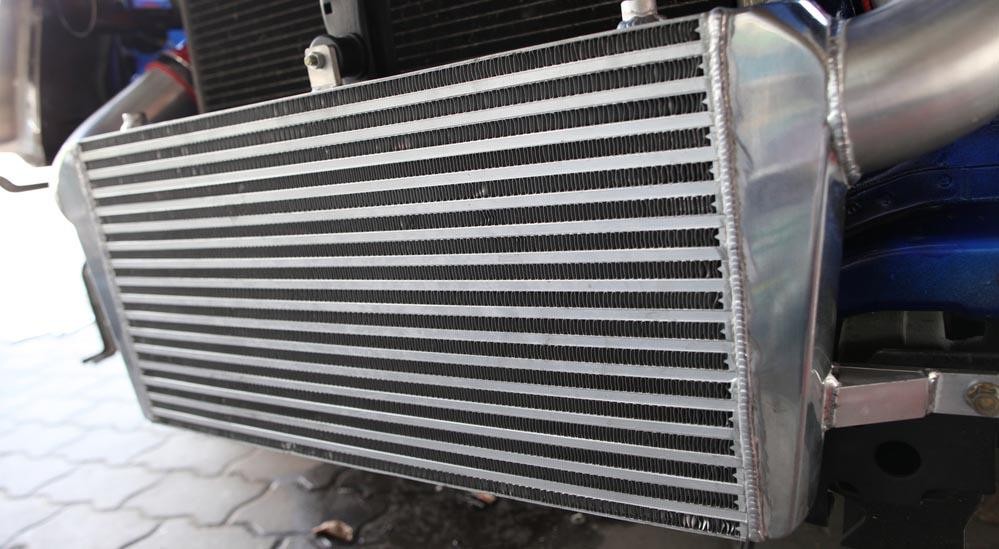
When should the intercooler be replaced?
In the off-road equipment sector, more and more brands are using turbocharged engines to deliver high torque and sustained power to their machines. This makes the intercooler, which is closely related to the turbocharger, particularly important. It ensures that the air entering the cylinder is both high pressure and low temperature, thus maximizing combustion efficiency and engine performance. Once the intercooler is damaged, it can trigger a series of chain reactions that cause the equipment to stop working.
So, this article will guide you through the situations in which the intercooler should be replaced, the gray areas that need to be carefully examined, and discuss intercooler repairs and replacement to answer questions that concern equipment owners.
Obvious signs that intercooler needs replacement
If you encounter any of the following situations, the decision is made for you. These conditions compromise the integrity and function of the intercooler beyond the threshold of reliable repair.
- Visible cracks on the core or end tanks
An intercooler operates under constant cycles of pressure and heat. Even a tiny crack invisible to the naked eye can quickly become a major leak under these conditions.
- Where to look: Inspect the welds between the core and end tanks, as well as the surfaces of the aluminum tanks themselves. Cracks are often caused by engine vibration and thermal stress after thousands of hours of operation.
- Why replace: Welding aluminum, especially the thin material of an intercooler, is extremely difficult to do correctly. A poorly executed weld creates a new weak point that is almost certain to fail. The risk of the repair failing in the middle of a critical operation is too high.
2. Severe internal contamination due to turbo failure
C’est l’une des raisons les plus critiques et souvent mal comprises pour remplacer un intercooler. Lorsqu’un turbocompresseur tombe en panne, il peut envoyer de l’huile moteur sous pression et de minuscules fragments métalliques directement dans l’intercooler.
- Le danger caché : Les passages internes de l’intercooler sont extrêmement étroits et complexes. Il est pratiquement impossible d’éliminer complètement toute l’huile épaisse et visqueuse ainsi que les particules métalliques abrasives.
- Pourquoi remplacer : Installer un nouveau turbocompresseur coûteux tout en réutilisant un intercooler contaminé revient à poser une bombe à retardement. Les débris résiduels peuvent se détacher et être envoyés directement dans le nouveau turbo ou, pire encore, dans les cylindres du moteur, provoquant des dégâts catastrophiques.
3. Dommages externes importants
Nos machines évoluent dans des environnements difficiles. Les chocs avec des pierres, des branches ou d’autres débris de chantier sont fréquents.
- Cœur perforé : Si un choc a perforé un des tubes du cœur de l’intercooler, cela crée une fuite massive de suralimentation impossible à réparer.
- Cœur ou réservoirs écrasés : Un choc important qui écrase une partie du cœur ou déforme un réservoir d’extrémité compromet l’intégrité structurelle de l’ensemble, rendant la défaillance imminente.
4. Corrosion généralisée
Dans les environnements à forte humidité, exposés au sel (travaux routiers hivernaux ou zones côtières) ou à des produits chimiques, l’aluminium peut corroder.
- À quoi cela ressemble : La corrosion se manifeste par une oxydation blanche et poudreuse qui ronge le métal, surtout autour des ailettes de refroidissement délicates.
- Pourquoi remplacer : La corrosion fragilise l’aluminium, le rendant cassant et susceptible de se fissurer sous la pression normale de fonctionnement. En cas de corrosion importante, l’intercooler est en fin de vie.
Quand inspecter et décider ?
Tous les problèmes ne justifient pas un remplacement immédiat. Certaines situations nécessitent un jugement basé sur une inspection approfondie.
- Ailettes légèrement endommagées : Il est normal qu’un intercooler présente quelques ailettes pliées. Si seule une petite portion de la surface est touchée (par exemple, moins de 20 %), l’impact sur les performances sera négligeable. Il est souvent possible de les redresser délicatement à l’aide d’un petit tournevis ou d’un peigne fin. En revanche, si une grande zone est obstruée, cela limitera le flux d’air et réduira l’efficacité du refroidissement, justifiant un remplacement.
- Persistent, undetectable supercharger leaks: You’ve replaced the hoses, tightened the clamps, and checked all the connections, but you’re still losing power and seeing black smoke? The intercooler itself may have an invisible crack. A pressure test, by plugging the inlet and outlet and applying low-pressure air (5–10 PSI), can reveal these hidden leaks with soapy water. If bubbles appear on the core, it’s time to replace it.
- High operating hours and preventive maintenance: An intercooler doesn’t last forever. On a machine with high hours (e.g., over 1,200–1,500 hours), constant vibration and thermal cycling cause metal fatigue. Replacing it preemptively during scheduled major maintenance can prevent a costly and unplanned breakdown in the field.
Repair or replace?
The first step is to understand the nature of the problem. Some supercharger system issues are easy to fix, while others permanently ruin the intercooler.
- Repairable: A split boost hose, loose clamp, or leaking gasket are repairable problems. Simply replace these inexpensive external components.
- Replacement Required: A crack in the intercooler core or tanks, severe internal contamination, or major physical damage means the unit is compromised. In these cases, replacement is the only reliable and safe solution.
Trying to save a few dollars by repairing a badly damaged intercooler almost always ends up costing more in the long run, due to lost productivity or a high risk of catastrophic engine failure.
Conclusion
The intercooler is essential to the performance and protection of turbocharged engines. In the event of cracks, internal contamination, or structural damage, replacement—not repair—is the only reliable solution. Ignoring a damaged intercooler or attempting to repair it often leads to more serious failures, including damage to the turbocharger and engine. Timely replacement ensures your equipment’s safe, efficient, and long-lasting performance.