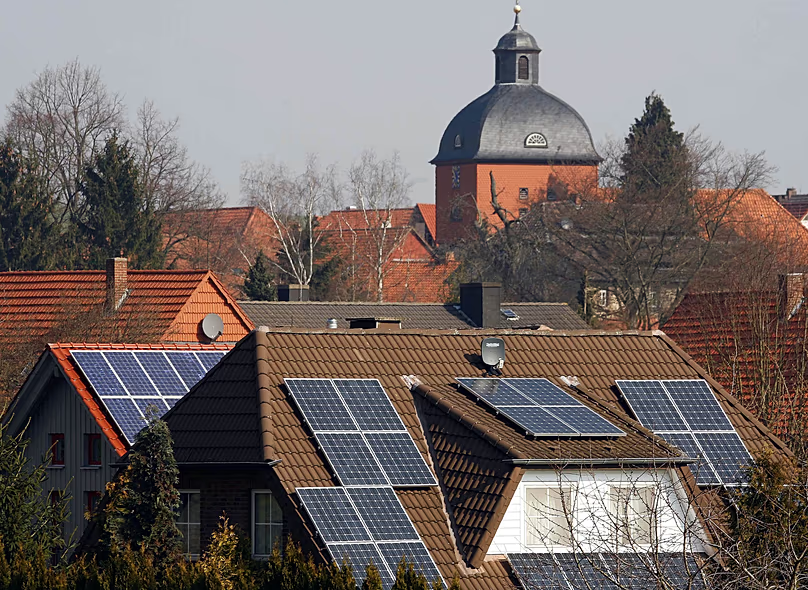
Off-Grid Living in the EU: How Small Energy Solutions Are Changing Urban Independence
Across Europe, the idea of going “off-grid” has shifted from a radical lifestyle choice to a growing conversation about energy independence, rising utility costs, and environmental responsibility. While fully disconnecting from the grid is still rare in urban settings, many Europeans are now exploring partial off-grid solutions that blend convenience with sustainability.
Cities like Berlin, Paris, and Amsterdam are seeing a rise in micro-solar adoption, battery storage systems, and smart home energy monitoring tools. These technologies allow households to reduce dependence on traditional power networks while still enjoying modern comforts. The result is a hybrid lifestyle—connected, but more self-sufficient.
Interestingly, even renters are joining this movement through accessible innovations like solar kits for renters, which make renewable energy possible without owning property or installing rooftop systems. This shift is redefining what “energy independence” means in urban Europe.
What Does “Off-Grid” Really Mean in the EU Context?
In Europe, going off-grid rarely means complete disconnection from public utilities. Instead, it usually refers to reducing reliance on centralized energy systems through renewable sources and efficient consumption habits.
Common Off-Grid Elements in Urban Homes
- Solar panels or balcony solar kits
- Home battery storage systems
- Energy-efficient appliances
- Smart meters and consumption tracking tools
These components allow households to generate and manage a portion of their own electricity.
Is Going Off-Grid Legal in Europe?
Legality varies across EU member states, but in general, partial off-grid living is legal and often encouraged through incentives. However, full disconnection from the grid can be more complex.
Legal Considerations by Region
| Country | Off-Grid Flexibility | Key Notes |
| Germany | High | Strong solar subsidies and feed-in tariffs |
| France | Moderate | Encourages hybrid systems over full disconnection |
| Netherlands | Moderate | Focus on smart grid integration |
| Spain | High | Growing support for self-consumption models |
Regulations typically focus on safety standards, grid interaction, and energy export rules rather than restricting renewable adoption.
The Rise of Urban Micro-Generation
One of the biggest trends in Europe’s energy landscape is micro-generation—small-scale energy production at the household level. This includes rooftop systems, community solar projects, and compact balcony setups.
Why Micro-Generation Is Growing
- Rising electricity prices across EU countries
- Increased awareness of climate change
- Government incentives for renewable energy
- Improved affordability of solar technology
Micro-generation allows individuals to take control of their energy usage without requiring large-scale infrastructure changes.
Renters Enter the Energy Independence Movement
Traditionally, solar energy adoption was limited to homeowners. However, new technologies are changing that dynamic by making renewable energy accessible to renters.
Key Advantages for Renters
- No permanent installation required
- Portable and modular systems
- Lower upfront investment
- Easy relocation between homes
This has opened the door for millions of urban residents to participate in the energy transition.
Comparing Energy Independence Options
| Solution Type | Ownership Requirement | Installation Complexity | Energy Output |
| Rooftop Solar | Homeowners only | High | High |
| Community Solar | None | Low | Medium |
| Balcony Solar Kits | Renters & homeowners | Very low | Low–Medium |
| Full Off-Grid Systems | Remote properties | Very high | Very high |
This comparison shows why compact solutions are becoming increasingly popular in cities.
How Technology Is Making Off-Grid Living Easier
Modern energy systems are heavily supported by digital tools that simplify monitoring and optimization. Smart technology plays a key role in making off-grid living practical rather than theoretical.
Key Innovations Supporting the Shift
- AI-based energy consumption tracking
- Smart plugs and automated appliances
- Real-time solar production dashboards
- Battery storage optimization systems
These technologies help users understand exactly how and when they use energy.
Cultural Shift Toward Energy Awareness
Across Europe, energy consumption is becoming part of everyday awareness—similar to how recycling or sustainable transport became mainstream topics over the past decade.
Changing Consumer Mindsets
- Preference for eco-friendly housing options
- Interest in reducing monthly utility costs
- Awareness of carbon footprints
- Demand for transparent energy usage data
This cultural shift is driving both policy changes and market innovation.
Barriers to Full Off-Grid Adoption
Despite growing interest, several challenges still prevent widespread off-grid living in urban environments.
Main Challenges
- Limited space for large-scale systems
- Regulatory restrictions in dense cities
- High initial investment for full independence
- Dependence on weather conditions for solar output
These barriers explain why hybrid solutions remain the most practical option today.
The Future of Energy Independence in Europe
The future of off-grid living in the EU is likely to be hybrid rather than absolute. Homes will combine grid connectivity with decentralized renewable systems to create flexible, resilient energy networks.
As technology continues to evolve, the line between “grid-connected” and “off-grid” will continue to blur, making energy independence more accessible to everyday urban residents across Europe.