The AI Visual Setup That Lets Me Create Consistent Brand Content Every Week
If you’re building a brand by yourself, with no design team, no agency, and no budget for stock subscriptions, you already know how fast visual content can eat your time. I’ve been there. The turning point for me was stumbling onto Nano Banana AI, and what I found was a whole toolkit: Kimg AI, a platform that runs multiple image models under one roof, gives you enough free credits to generate 200+ premium model images within your first week before you spend a cent, and completely changed how I produce brand content every week.
I. The Real Problem With Solo Brand Visuals
Most solo operators don’t have a design problem. They have a workflow problem.
- You need five different visual styles — product mockups, social graphics, hero banners — and you need them this week, not next month.
- Jumping between tools means re-learning interfaces, managing subscriptions, and losing half a morning to friction.
- Free tools give you watermarks or mediocre output. Paid tools charge you before you even know if they fit your brand.
The real cost isn’t money. It’s momentum. Every time you stop troubleshooting a tool, you lose the thread of what you were actually building.
II. Why a Unified Model Hub Matters More Than One “Best” Tool
There’s always a new model that’s supposedly the best. Flux. GPT Image 2. Grok Image. Seedream. In reality, different models perform differently depending on what you’re making.
- A photorealistic product render needs a different model than an anime-style character sheet.
- Brand consistency matters more than picking one “winner” — you need to test across models to find what fits your visual language.
- Switching tools mid-project breaks your creative rhythm. Having everything in one place fixes that.
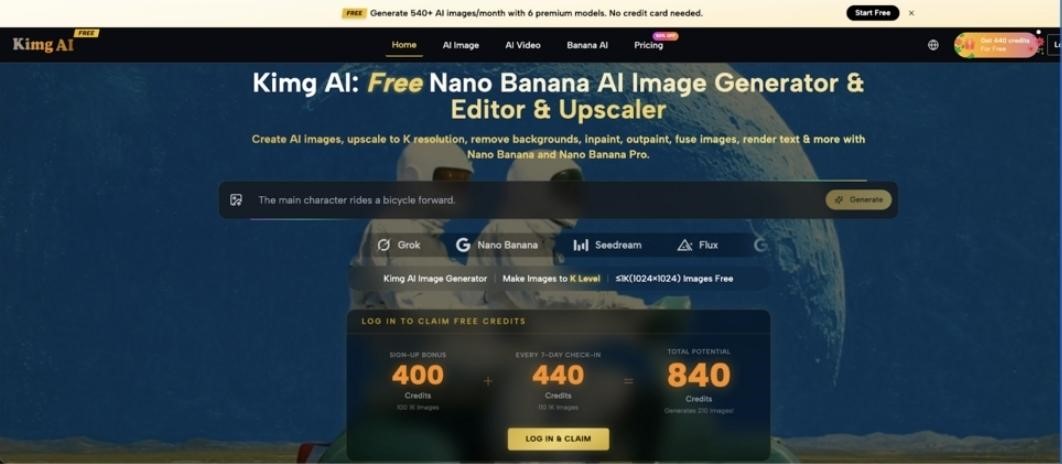
This is where Kimg AI earns its place in my stack. It’s not just one model — it’s a hub where you can test and switch between Nano Banana, Seedream, Flux, GPT Image 2, Grok Image, and more without leaving the site. That alone saves a significant amount of context-switching.
III. Breaking Down the Free Credit System
Here’s the part most people skim past and then kick themselves for missing.
- Sign-up bonus: 400 credits — just for creating an account. No payment info required.
- 7-day check-in bonus: 440 credits — log in and check in for seven consecutive days and you get another 440 credits on top.
- That’s 840 credits total before you spend a single dollar, which translates to over 200 image generations using premium models.
The check-in system also resets weekly, meaning every week you can earn another 440 credits just by showing up. That works out to roughly 110 images per week, ongoing, at no cost. For a solo brand builder, that’s a legitimate production budget — one that most people completely overlook when they first sign up.
IV. How I Actually Use Nano Banana for Brand Work
Nano Banana is one of the models available inside Kimg AI, and it’s become my default starting point for a lot of brand visual work.
- It handles stylized illustration well — useful for social content that needs to look distinct rather than generic.
- The output has a consistency that makes it easier to build a cohesive visual identity across multiple assets.
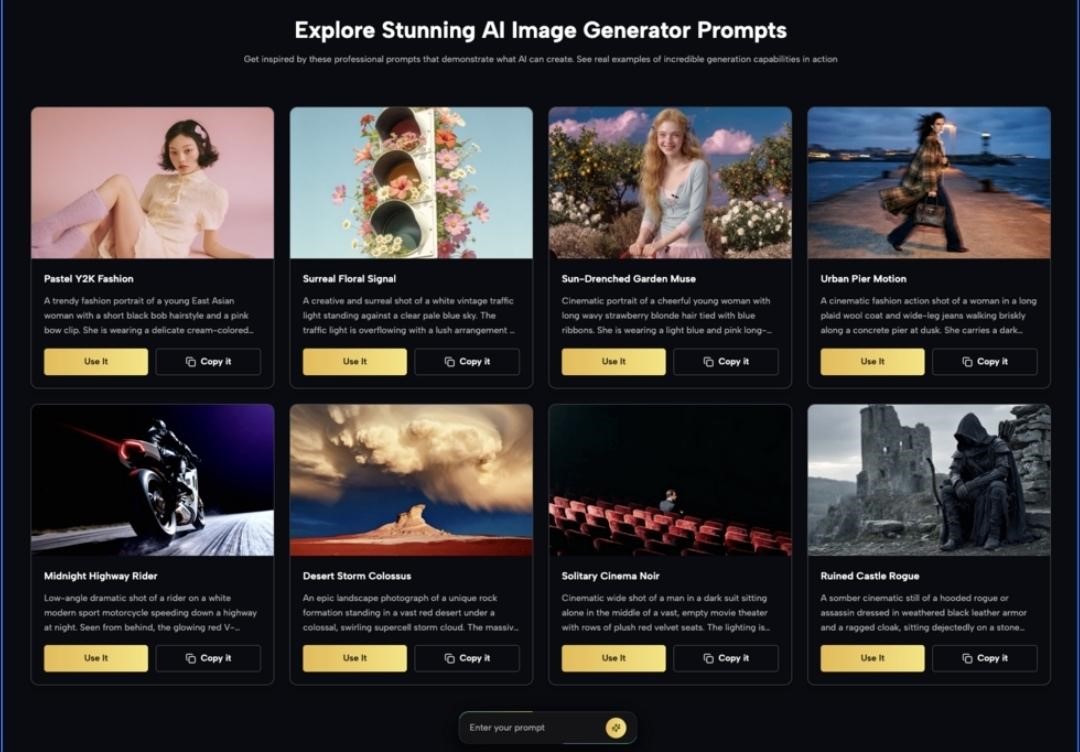
- Because it lives inside Kimg AI alongside other models, I can generate something with Banana AI, compare it to a Flux or Seedream output in the same session, and make a real side-by-side call on which direction fits the brand.
You don’t always need to know which model is “best.” You need to know which one is right for this project. Having Nano Banana AI and the others in the same place makes that call much faster.
V. From Static Image to Video — Without Leaving the Site
This one surprised me when I first discovered it. After generating an image, Kimg AI lets you convert it to video using Veo 3, and you can use the credits you’ve already earned to do it.
- That means the free credits you get from signing up and checking in can go toward video, not just images.
- For brand reels, animated social posts, or product teasers, this closes the loop without adding another tool to your stack.
- You get the image and the motion asset from the same session, with the same visual style, without re-prompting from scratch.
It’s a small workflow detail that adds up quickly when you’re producing content on a regular schedule. Most platforms stop at image generation and leave you to figure out the video side separately. Having both in one place removes a decision point that would otherwise slow you down every single week.
VI. Building a Weekly Visual Rhythm on Zero Budget
This is the practical part. If you’re starting from scratch, here’s how the first two weeks actually look:
- Week 1: Sign up, collect your 400 credits, complete the 7-day check-in, collect 440 more. You now have 840 credits to work with.
- Use the first batch to test models — run the same prompt through Nano Banana, Flux, and Seedream. See what fits your brand tone before committing to a direction.
- After the first week: Check in every day for the next 7 days and earn another 440 credits. That’s your ongoing weekly production cycle.
At 110 images per week for free, you’re not just testing — you’re actually shipping brand content at volume. The consistency that comes from having a reliable, repeatable system every week is what separates brands that look established from ones that look like they’re still figuring things out.
VII. The Stack in Plain Terms
Solo brand work doesn’t need to be expensive or complicated. What it needs is the right structure:
- One place to test multiple models without managing five accounts — Kimg AI handles this.
- A model that gives you stylistic range — Banana AI and Nano Banana both sit in that category, covering everything from clean product visuals to more expressive, illustrative styles.
- A credit system that rewards consistency — the weekly check-in structure at Kimg AI does exactly that, giving you a reason to show up and a reward for doing so.
- Video capability built in — Veo 3 integration means you’re not stopping at static, and you’re not opening a second tab to finish the job.
The brands that look polished and prolific with small teams aren’t using magic. They’re using better-organized tools and sticking to a rhythm. If your visual output has been inconsistent or slow, the bottleneck probably isn’t your eye for design. It’s your setup.
Conclusion
You don’t need a large team or a large budget to produce great brand visuals consistently. You need a workflow that removes friction at every step. Kimg AI — with Nano Banana, multi-model access, generous free credits, and built-in video conversion — is the most practical starting point I’ve found for solo brand builders who need to move fast and stay consistent.
Start with the sign-up bonus. Check in daily for a week. Then let the output speak for itself.